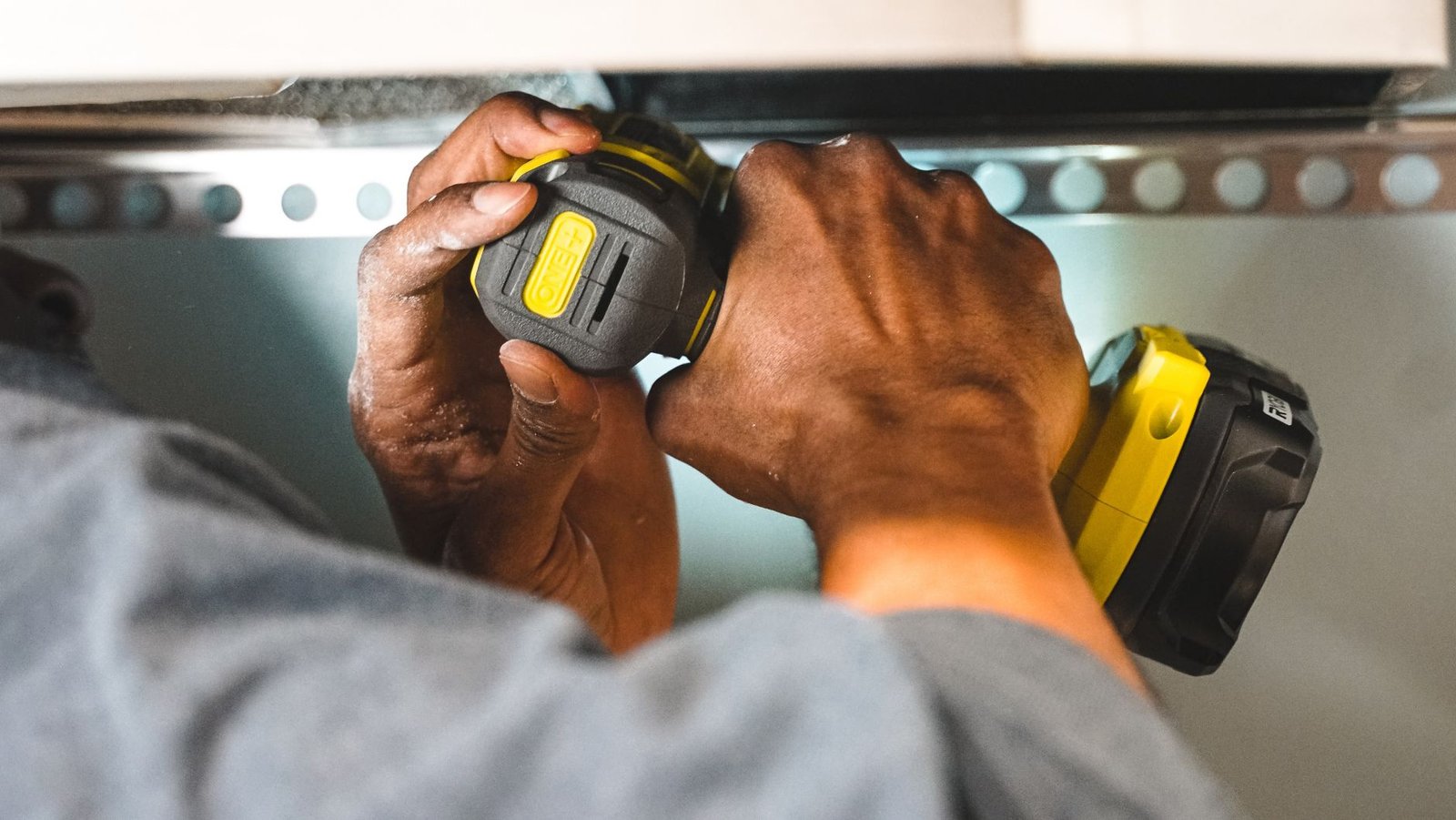
If you’re outfitting a garage or a jobsite, the choice between air tools vs electric tools usually comes down to one question: do you already own a compressor? Air tools are lighter, cheaper to buy, and almost impossible to stall, but they’re useless without a tank of compressed air and a hose dragging behind you. Electric tools cost more up front and carry a motor and battery in your hand, yet they plug into a wall outlet or a charged pack and go anywhere. Neither category wins outright — the right answer depends on how much you use the tool, how far you work from an outlet, and how much you’re willing to spend on the supporting equipment.
Key Takeaways
- Air tools need a compressor: budget $300–$1,200 for a unit that can actually feed an impact wrench or die grinder, not a $99 pancake nailer compressor.
- Electric wins on portability: cordless tools run anywhere, while air tools are tethered to a hose and a tank.
- Air tools win on size and weight: a pneumatic impact wrench is typically 30–50% lighter than a cordless equivalent with a battery attached.
- Running cost favors air if you already own a compressor — pneumatic tools themselves are often $40–$100 cheaper per tool than cordless equivalents.
- Match the tool to the task: high-duty-cycle shop work favors air; intermittent, remote, or precision work favors electric.
- Battery platform lock-in is real: once you buy into one brand’s batteries, switching brands means replacing every pack and charger.
How Air Tools Actually Work
A pneumatic tool converts compressed air into rotary or reciprocating motion. Air enters through a quick-disconnect fitting, spins a vaned rotor or drives a piston, and exhausts back into the room. That design has almost no electrical parts to burn out, which is why a well-oiled air impact wrench can survive decades of shop abuse.
The catch is the compressor. Air tools are rated by average CFM (cubic feet per minute) at a given pressure, usually 90 PSI. A 1/2-inch impact wrench typically demands 4–5 CFM; a die grinder or DA sander can pull 15–20 CFM. If your compressor can’t sustain that flow, the tool stalls and the tank drains in seconds. Tank size sets how long you can run before the motor kicks back on; pump CFM sets whether it can keep up.
Pro Tip: Size the compressor to your hungriest tool, not your cheapest one. Buying a 6-gallon pancake unit for a DA sander is the single most common mistake in home shops.
What Makes Electric Tools Different
Electric tools split into two families: corded and cordless. Corded tools deliver constant, unlimited power — a 7-amp angle grinder or a 15-amp circular saw never sags because the “tank” is the grid. Cordless tools trade peak power for freedom, and modern brushless motors with lithium-ion packs have closed most of the gap.
A cordless impact wrench now matches or beats a pneumatic one on breakaway torque in many cases. The tradeoff is bulk: the motor, electronics, and battery add weight and girth, which matters when you’re working overhead or inside a wheel well. Corded tools sit in the middle — full power, no battery cost, but a cord that limits reach.
Heat is the other difference. Electric motors generate heat internally and rely on cooling fans; run one hard for long enough and thermal protection shuts it down. Air tools run cold because expanding air carries heat away.
Air vs Electric: Head-to-Head
| Factor | Air Tools | Electric Tools |
|---|---|---|
| Upfront tool cost | $30–$150 typical | $80–$400 typical |
| Support equipment | Compressor, hose, fittings ($300–$1,200) | Outlet or batteries ($60–$200 per pack) |
| Weight in hand | Light (2–4 lb) | Heavier (4–8 lb cordless) |
| Portability | Tethered to hose | Cordless goes anywhere |
| Duty cycle | Runs continuously if air holds | Thermal cutoff on heavy use |
| Maintenance | Daily oiling, water trap checks | Brush/electronics wear, battery degradation |
| Best for | Shop work, sanding, grinding, high volume | Remote work, precision, intermittent use |
The table makes the tradeoff clear: air wins on running cost and duty cycle once the compressor exists, electric wins on independence and simplicity.
When Air Tools Win
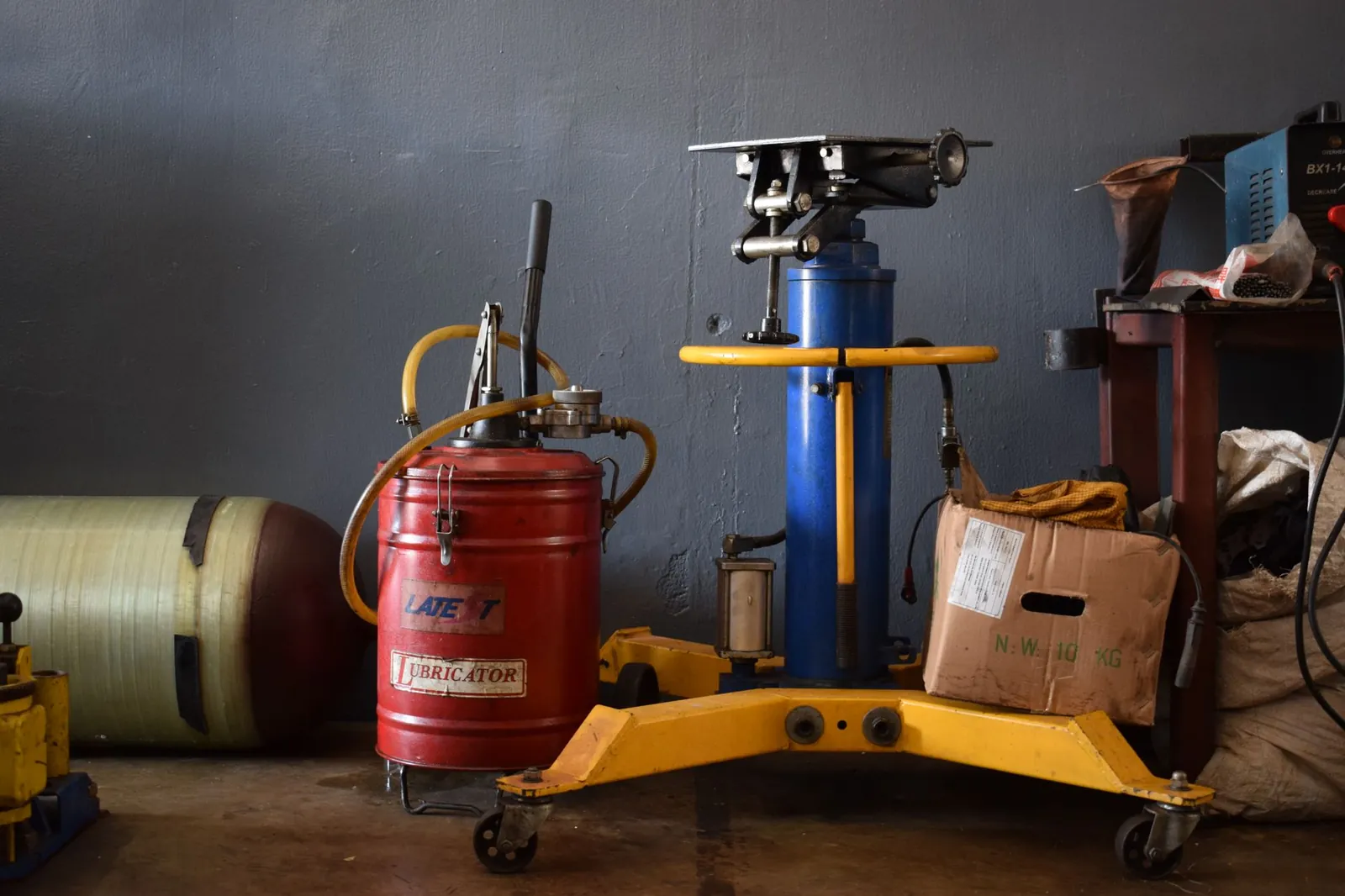
Air tools dominate in environments where a compressor already lives and the work is repetitive.
- Auto body and paint shops — DA sanders, die grinders, and spray guns run for hours and need constant airflow.
- Tire shops — a 1/2-inch air impact is the standard for lug nuts because it never needs a charge.
- Production assembly — pneumatic screwdrivers and ratchets cycle thousands of times a day without overheating.
- Confined or wet areas — with no motor windings, air tools carry lower shock and spark risk in damp conditions.
The common thread is high duty cycle. When a tool runs all day, the compressor investment pays for itself, and the lighter tool reduces operator fatigue.
When Electric Tools Win
Electric tools take over wherever a hose or a tank is a liability.
- Jobsite framing and remodeling — no compressor to haul, no hose to trip over on a roof.
- Roadside and remote repair — a cordless impact in the trunk beats waiting for a tow.
- Precision work — corded and cordless drills, drivers, and oscillating tools offer finer speed control than many pneumatic equivalents.
- Homeowners with occasional projects — one cordless drill and one impact driver cover 90% of tasks without a compressor.
Warning: Never assume a cordless tool’s advertised torque matches real-world breakaway torque. Marketing numbers are often measured at the anvil, not through a rusty, torqued fastener.
The Real Cost of Going Air
The tool price is the smallest part of the air equation. A genuinely useful setup includes:
- Compressor — $300–$1,200 for 20–60 gallons with adequate CFM.
- Air hose — $25–$80 for a quality 50-foot rubber hose.
- Fittings and quick-disconnects — $15–$40.
- Water trap and filter — $30–$100 to protect tools and paint work.
- Inline oiler or manual oiling — $10–$40.
- Tools themselves — $30–$150 each.
That’s easily $500–$1,500 before you buy a single tool, which is why air only makes financial sense if you commit to the platform. The U.S. Department of Energy publishes guidance on compressor efficiency and sizing that’s worth reading before you buy, since an oversized or undersized unit wastes both money and air.
Maintenance and Safety Differences

Air tools need daily lubrication — a few drops of pneumatic oil in the inlet before each use — and dry air, or internal rust destroys the rotor. Water traps must be drained regularly.
Electric tools need clean vents, sharp accessories, and battery care. Lithium-ion packs last longest when stored at partial charge in moderate temperatures, not fully drained in a freezing garage.
Both categories demand respect: pneumatic tools can whip a hose and spray oil mist, while cordless tools can overheat or catch in material. Eye protection and secure workholding apply to both.
Frequently Asked Questions
Are air tools stronger than electric tools?
Not inherently. Peak torque depends on the specific tool. A quality cordless impact can match a pneumatic one, but air tools sustain power longer without thermal shutdown. For continuous heavy work, air usually holds up better; for short bursts, electric is often equal.
Do I need a big compressor for air tools?
Yes, for most impact wrenches, grinders, and sanders. Look for a compressor delivering at least the tool’s rated CFM at 90 PSI. Small pancake compressors handle nailers and staplers but stall on high-demand tools.
Are electric tools cheaper than air tools overall?
For occasional users, yes. A single cordless drill and impact driver set costs far less than a compressor plus hoses plus pneumatic tools. Air becomes cheaper only when you already own a suitable compressor and use tools heavily.
Can I use air tools without oiling them?
You can, but you should not. Running a pneumatic tool dry accelerates wear on the rotor and vanes. Use inline lubrication or add a few drops of pneumatic oil before each session, and never oil tools used for painting.
Which is better for home garage use?
For most home garages, cordless electric tools win. They need no compressor, store easily, and cover typical repairs. Add air only if you take on bodywork, heavy sanding, or frequent tire work.
Do air tools last longer than electric tools?
Generally, yes, when maintained. Pneumatic tools have fewer failure-prone components and no batteries to degrade. Electric tools last well too, but brushes, electronics, and battery packs eventually wear out or lose capacity.
Conclusion
Whichever way you lean, start by writing down your three most common tasks and the tool each one needs, then price the full system — compressor, hose, and fittings for air, or batteries and charger for electric. Buy for the work you actually do every month, not the job you imagine doing once, and the decision usually makes itself.